
Facet Joint Injections: What to Expect During a Consultation
A plain-language walkthrough of facet joint injections — how they are used as both a diagnostic test and a treatment, what to expect at the consultation, and questions worth bringing to your appointment.
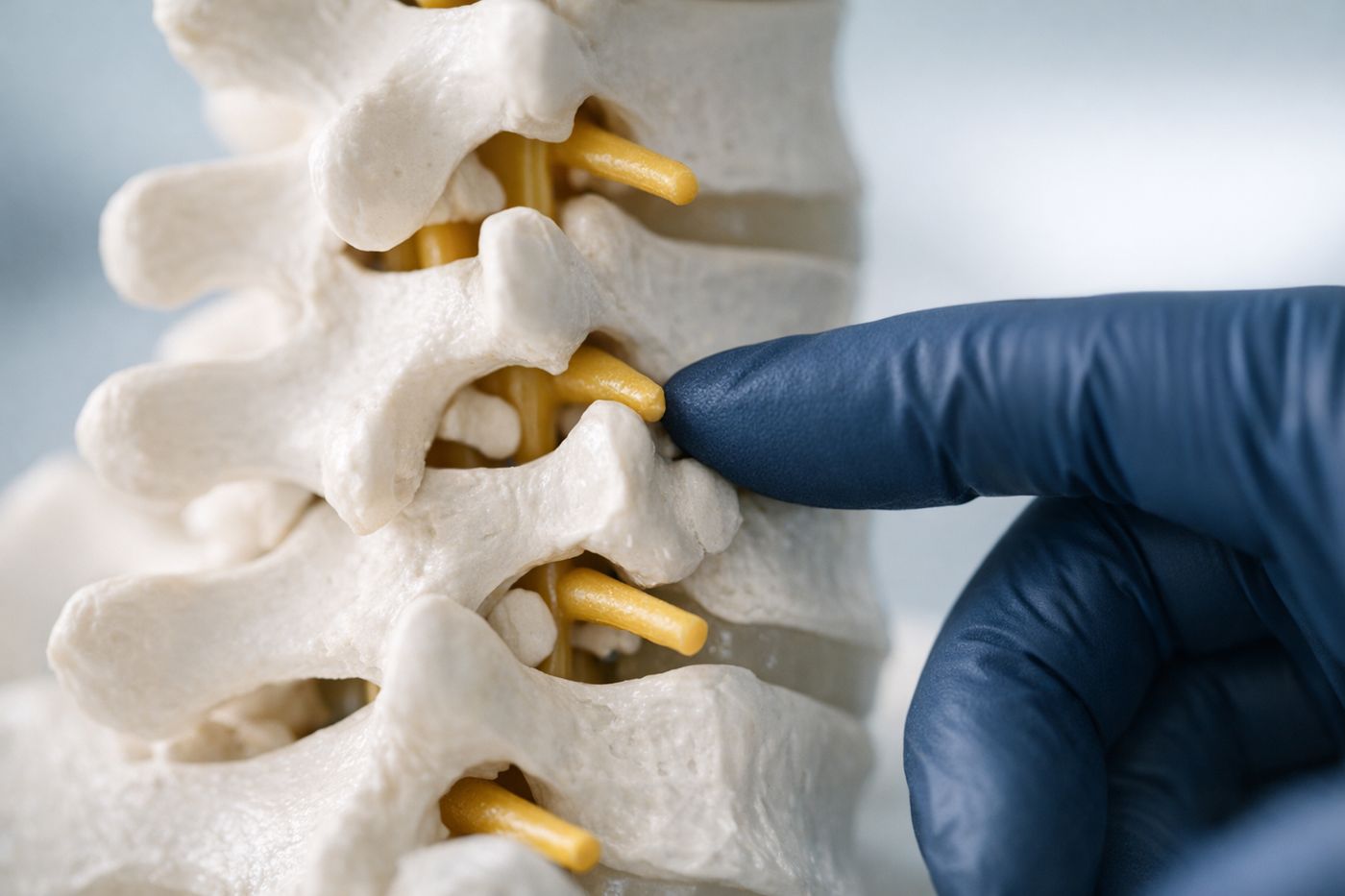
When the facet joints get pointed to as a likely pain source
The lumbar spine has a pair of small joints at every level called facet joints, and they are responsible for guiding motion between vertebrae. These joints can become inflamed, develop arthritis, or get aggravated by repetitive loading, particularly in patients with longstanding mechanical back pain. Facet-mediated pain often shows up as a dull, aching low back pain that worsens with extension or rotation and tends to improve when the spine is flexed forward. It is rarely the only contributor to a patient’s pain picture, and providers typically arrive at it through a process of elimination as much as through positive identification.
Imaging studies sometimes show facet joint changes on MRI or CT, but imaging findings do not always correlate with pain. That gap is part of why a diagnostic injection is sometimes the next step.
What happens in the consultation visit
The first visit is usually focused on three things: a detailed history of the pain (when it started, what makes it better or worse, how it has responded to prior treatments), a physical exam that includes specific movement tests, and a review of any imaging or treatment records the patient has already accumulated. The physician is trying to build a working hypothesis about which structures are most likely to be generating pain.
If the facet joints look like a probable contributor, the conversation will usually cover what a diagnostic injection involves, why it is being recommended, what to do if it helps, and what to do if it does not. The decision to proceed is collaborative and should never feel rushed.
How a facet joint injection actually works
A facet joint injection is performed under image guidance, typically fluoroscopy. The physician numbs the skin, then directs a small needle to the target facet joint or to the medial branch nerves that supply it. A small amount of local anesthetic, sometimes combined with a corticosteroid, is delivered to the area.
The diagnostic value comes from how the patient responds in the hours after the injection. If the procedure provides significant pain relief during the window the local anesthetic is active, that is a useful piece of information for the physician: it suggests the targeted facet level is contributing to the pain. If the response is minimal, the working hypothesis shifts and other structures get evaluated.
The therapeutic value, when it occurs, comes mostly from the corticosteroid component and tends to develop over several days. Duration of relief varies considerably between patients and is not predictable in advance.
Questions worth bringing to your consultation
Patients typically get more out of the visit when they arrive with specific questions. A short, practical list:
- What other diagnoses are still on the table? Knowing what has been ruled in or ruled out helps the conversation stay grounded.
- If the injection is mostly diagnostic, what are the next steps if it works? A common pathway is medial branch blocks followed by radiofrequency ablation if the response pattern fits.
- What are the next steps if it does not work? A non-response narrows the diagnosis and shifts attention elsewhere; that information is itself valuable.
- What is the recovery window after the procedure? Most facet injections involve minimal downtime, but patients vary, and the answer depends on the specifics of the procedure planned.
- Are there activity restrictions? Same answer; the specifics depend on the case.
- What does follow-up look like? Pain practices typically track response with structured assessments at defined intervals rather than ad-hoc check-ins.
- How does insurance or lien-billing work for this? Coverage details affect timing and authorization, and the front office is usually the right point of contact.
The window after the injection
Patients are usually given a pain diary or asked to track their response in the hours and days following the procedure. That feedback is what the physician uses to decide what comes next. The temptation is to evaluate the injection by how the patient feels at a single moment, but practice tends to look at the trend across the response window and weigh that against function: whether a patient can sit longer, walk further, or sleep better, not just whether the pain score dropped at one specific hour.
If relief is meaningful and lasting, the conversation may be about extending the strategy with a similar approach at a future date. If relief is short-lived but real, the next step is often a medial branch block sequence to evaluate candidacy for radiofrequency ablation. If there is no response at all, the focus typically returns to the broader diagnostic question.
Bringing it back to the practical question
Most patients sit down for a facet joint injection consultation with a version of the same question: is this the thing that is going to help me. The honest answer from any pain medicine practice is that the injection is a step in a larger evaluation, not a finished answer. What it does well is generate information that is hard to get any other way, and it does so with a procedure that is well established and image-guided.
Patients with active workers’ compensation claims, lien-based personal-injury cases, or commercial insurance can typically get a clear coverage answer from the practice’s intake team before the consultation date. That removes one variable from a process that already has several.