Overview
Chronic low back pain has many possible drivers — disc-related, facet-related, sacroiliac, or vertebrogenic (from damaged vertebral endplates). Accurate diagnosis is essential because the right procedure depends on the pain generator.
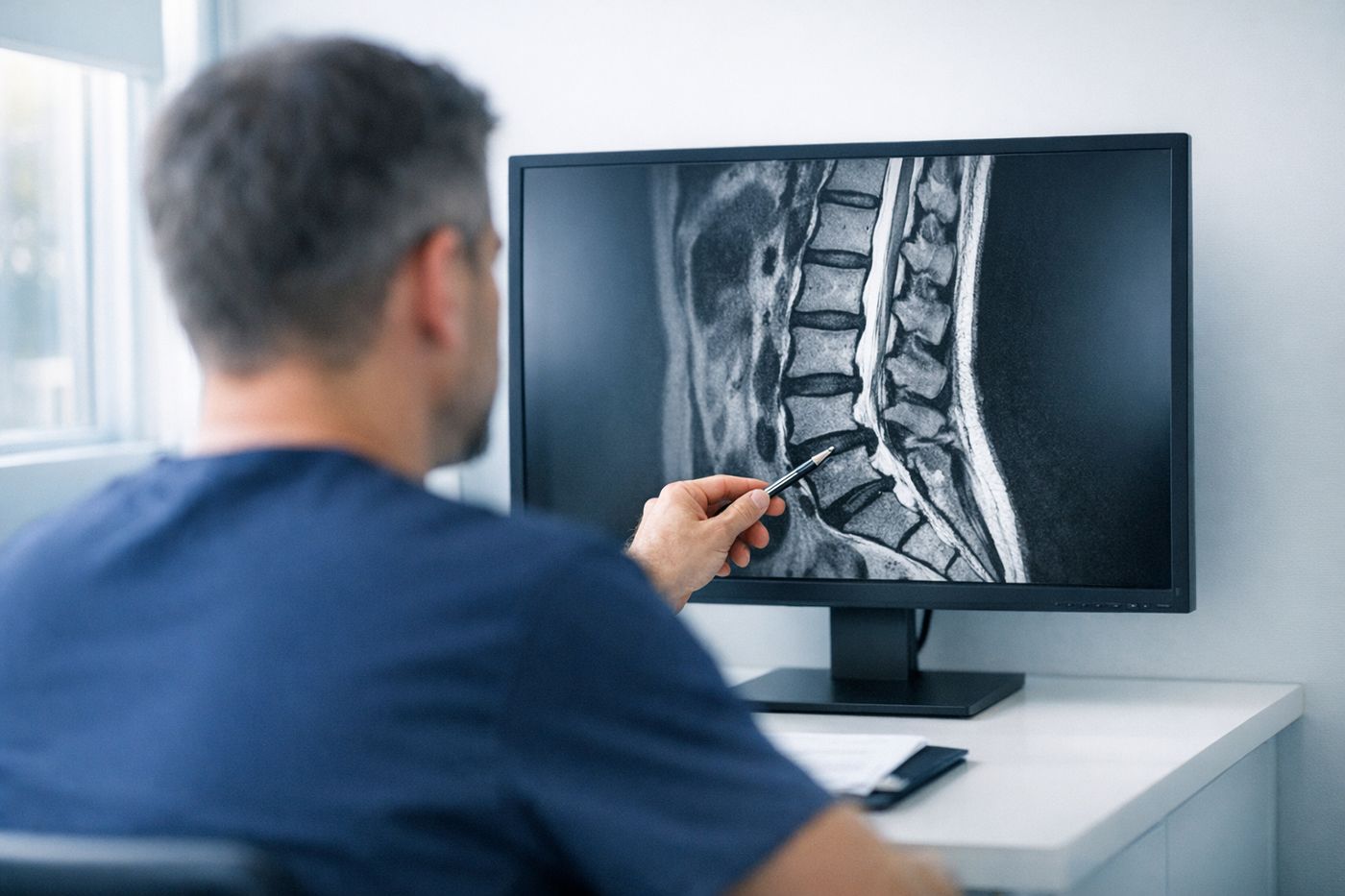
For vertebrogenic low back pain, where an MRI shows Modic changes at the vertebral endplates, the Intracept procedure uses radiofrequency energy to ablate the basivertebral nerve — a minimally invasive option that can provide long-lasting relief when other treatments have failed.
Common Symptoms
- Deep, aching low back pain
- Pain worse with bending forward or prolonged sitting
- Pain that persists despite physical therapy and medication
- Pain sometimes radiating into the buttock but not past the knee
Common Causes
- Vertebral endplate damage (Modic changes)
- Facet joint arthritis
- Sacroiliac joint dysfunction
- Chronic disc degeneration
How We Treat Chronic Low Back Pain
When to See a Pain Specialist
If your pain has lasted longer than a few weeks, interferes with work, sleep, or activity, or hasn’t responded to rest, physical therapy, or over-the-counter medication, it’s worth a consultation. Our team can confirm the diagnosis and walk you through the interventional options that fit your case.
How a pain specialist builds a step-by-step diagnostic pathway for chronic low back pain
Chronic low back pain rarely has a single, obvious source. A pain specialist approaches it as a structured process: gathering evidence in layers, ruling out serious causes early, and narrowing the field before any procedure is considered. The goal of a diagnostic pathway is clarity, so that later decisions rest on findings rather than guesswork.
The first step is usually a detailed history. Providers ask when the pain began, what movements worsen or ease it, whether it radiates into the legs, and how it affects sleep and daily activity. This conversation often reveals patterns that point toward specific structures, such as the discs, facet joints, or the sacroiliac region. A physical examination follows, testing range of motion, strength, reflexes, and nerve sensitivity.
Early in the pathway, the clinical team screens for what are sometimes called red flags: signs that could indicate a more serious underlying condition. These include unexplained weight loss, fever, progressive weakness, or loss of bowel or bladder control. When any of these appear, imaging and specialist referral are prioritized. When they are absent, a period of conservative care is often reasonable before advanced testing.
Imaging is ordered selectively rather than routinely. An X-ray can show alignment and degenerative changes, while an MRI provides detail on discs, nerves, and soft tissue. Specialists are careful to interpret images alongside symptoms, because scans frequently show age-related changes that are not the actual source of pain. A finding on imaging is treated as one piece of evidence, not a verdict.
When the source remains unclear, diagnostic injections may help localize the pain. By temporarily numbing a specific structure and observing the response, providers can gather information about which tissue is generating symptoms. These are used as investigative tools within the pathway, and the results guide whether further treatment is likely to be appropriate.
Throughout the process, the pain specialist weighs several factors together:
- Symptom pattern: location, timing, and what changes the pain
- Examination findings: objective signs from the physical assessment
- Imaging correlation: whether scans match the clinical picture
- Response to conservative care: physical therapy, activity modification, and other early measures
This layered approach means that no single test defines the plan. Instead, evidence accumulates until a working explanation emerges that fits the whole picture. Patients who understand the pathway often feel more prepared for each appointment, because they can see how one step informs the next rather than expecting an immediate answer.
This page is informational and is not medical advice. Treatment options should always be made in consultation with a qualified physician.