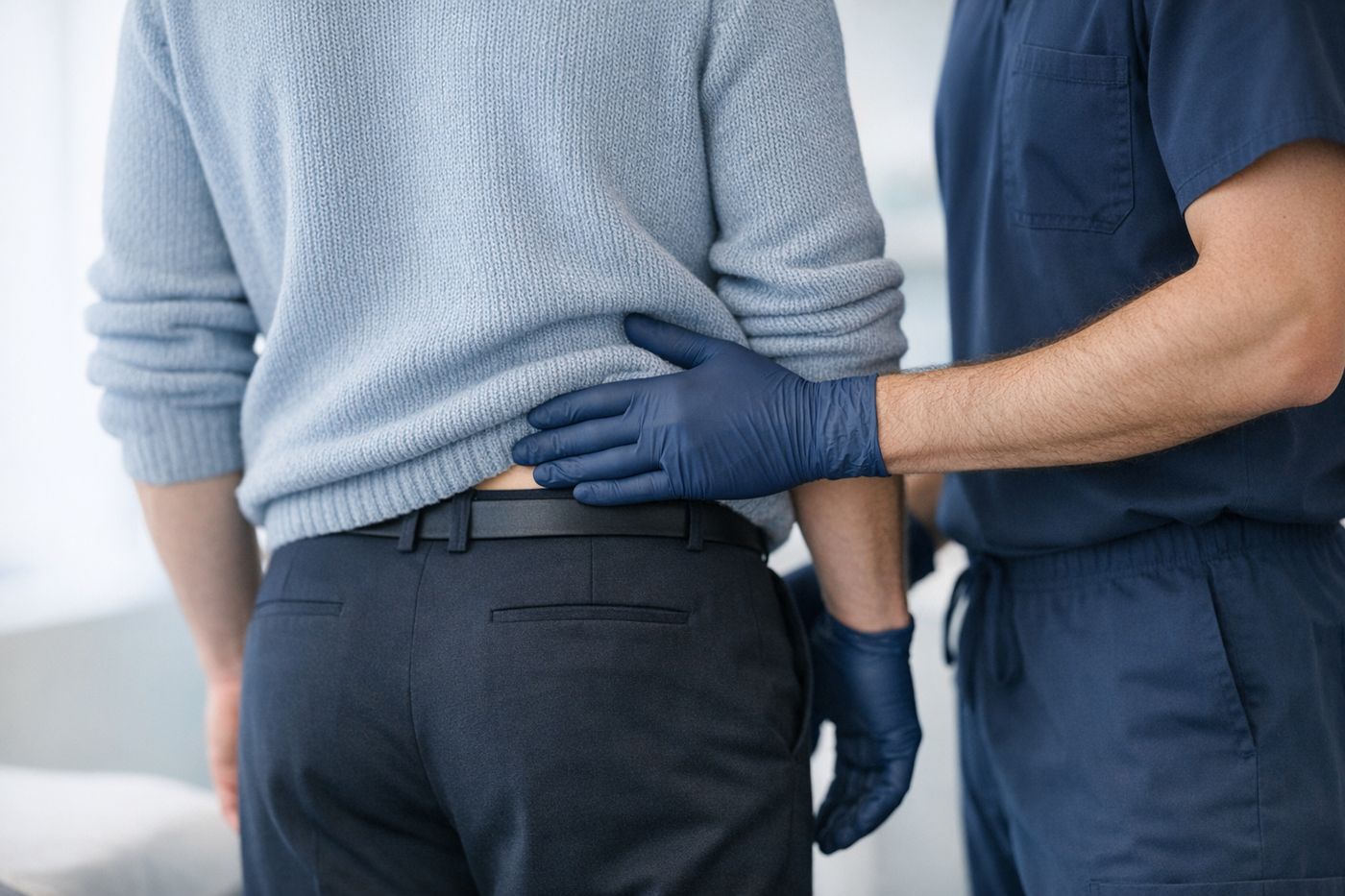
What to expect during recovery after a sacroiliac joint injection
Recovery after a sacroiliac joint injection is usually straightforward, and most patients return to light activity the same day. Knowing what the first hours and days typically involve can help you plan ahead and recognize what is normal.
Immediately after the procedure, the area around the injection site may feel numb or slightly weak because a local anesthetic is often used alongside the medication. This sensation generally fades within a few hours. Some patients notice mild soreness at the injection site for a day or two, which many find eases with a cold compress applied for short intervals.
It is common for providers to ask you to track your pain levels in the hours and days that follow. The local anesthetic may provide short-term relief soon after the injection, while any anti-inflammatory benefit from a corticosteroid tends to develop more gradually, often over several days. Because these two effects operate on different timelines, a brief return of discomfort after the anesthetic wears off does not mean the procedure was unsuccessful.
For the remainder of the first day, the clinical team generally recommends taking it easy. Many patients are advised to avoid strenuous activity, heavy lifting, and vigorous exercise for the first 24 hours, then resume normal routines as comfort allows. If you received any sedation, you will need someone to drive you home, and you should avoid operating machinery until the following day.
Patients who respond well to a sacroiliac joint injection typically report improved mobility and reduced discomfort over the days that follow, which can create a useful window for physical therapy or a home exercise program. Your provider may use your response to guide the next steps in your care plan.
Signs to discuss with your provider after a sacroiliac joint injection
Most side effects are minor and temporary. However, you should contact the clinic if you experience worsening or severe pain, signs of infection such as increasing redness, swelling, warmth, or fever, or any new numbness or weakness that does not resolve. These are uncommon, but your care team would rather hear from you early.
Keeping a simple log of your symptoms, including when relief begins and how long it lasts, gives your provider valuable information. This record helps the clinical team assess how the sacroiliac joint injection affected your recovery and whether adjustments to your plan may be worthwhile.
This page is informational and is not medical advice. Treatment options should always be made in consultation with a qualified physician.