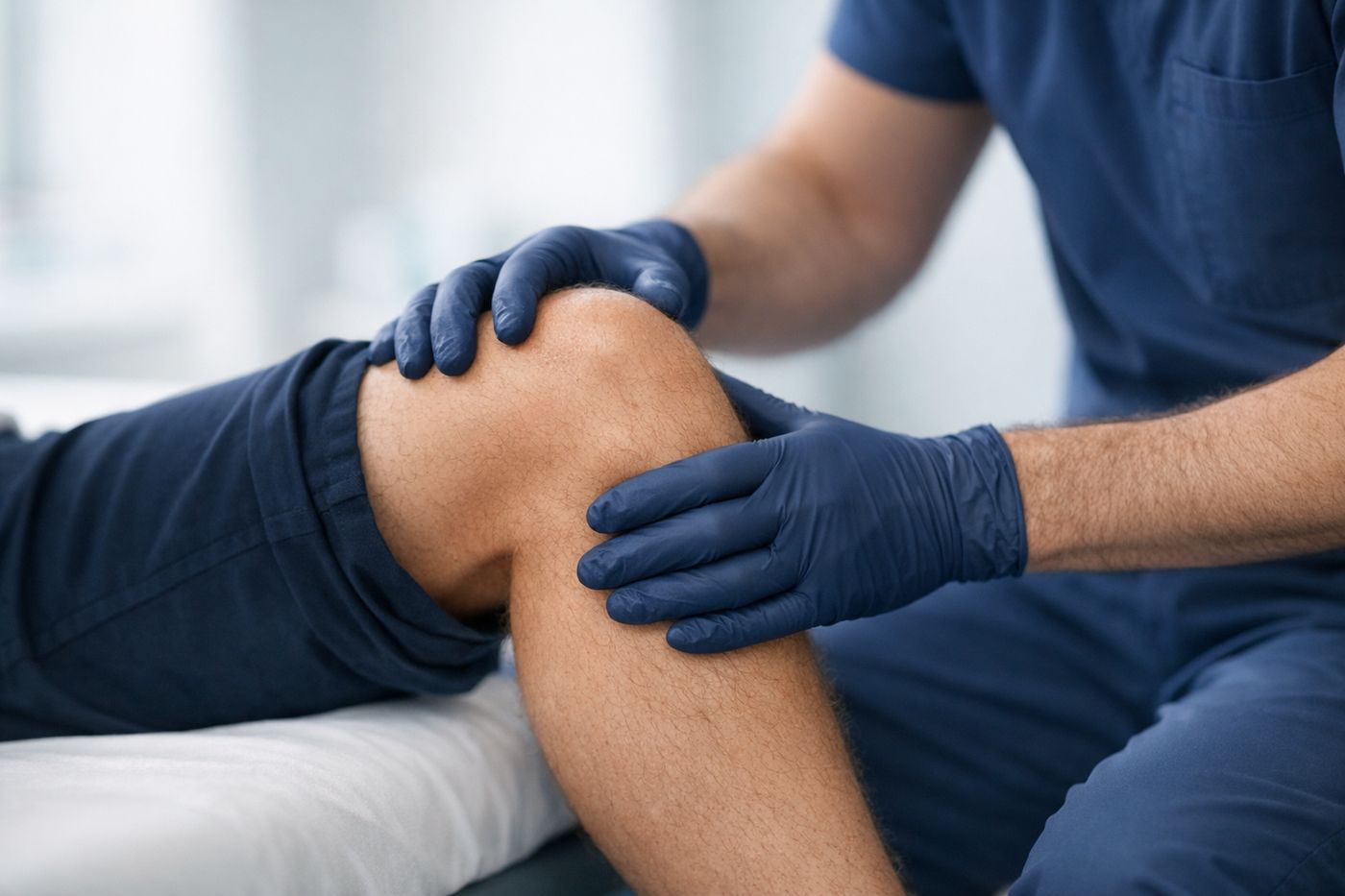
A two-stage, non-surgical treatment for knee pain that starts with targeted joint injections and advances to nerve-targeting radiofrequency when needed.
Treatment areaKnee joint
Overview
Knee injections deliver anti-inflammatory medication directly into the joint to reduce pain from arthritis and inflammation. They can be repeated over time and are often combined with physical therapy and weight-bearing optimization.
When pain persists despite conservative care, genicular rhizotomy offers a next-step option. This image-guided procedure uses radiofrequency energy to disrupt the small sensory nerves around the knee that transmit pain, providing longer-term relief without surgery.
Knee injections deliver anti-inflammatory medication directly to the joint. If pain persists, genicular rhizotomy uses radiofrequency energy to disrupt the sensory nerves around the knee — reducing pain signals without surgical intervention.
What recovery after knee genicular nerve rhizotomy typically involves
Knee genicular nerve rhizotomy recovery tends to be straightforward for most patients, though the exact pattern varies with individual health, activity level, and how the knee responded to the preceding diagnostic nerve blocks. The information below describes what patients commonly experience, so you can plan the days around your procedure with realistic expectations.
In the first 24 to 72 hours, mild soreness at the treatment sites is typical. Some patients notice a temporary increase in knee discomfort before the benefit settles in; this is a recognized part of the process and usually eases over the first week. Applying ice for short intervals and resting the knee are the measures the clinical team most often suggests during this window. Over-the-counter options may be discussed at your visit, and any anti-inflammatory guidance will be tailored to your medical history rather than applied as a blanket rule.
Most patients return to light daily activity within a day or two, and many resume normal routines within a week. Because rhizotomy interrupts pain signaling rather than restoring joint structure, the knee can feel more capable than it is in the early phase; providers generally advise easing back into demanding activity so you do not overload a joint whose pain feedback is reduced. Walking is usually encouraged early, while high-impact loading, deep squatting, and prolonged kneeling are typically reintroduced gradually.
Meaningful pain relief does not always arrive immediately. The nerves treated need time to respond, and patients who respond well often report the fullest benefit developing over one to three weeks. Relief duration varies widely; when signaling eventually regenerates, symptoms may return over a period of months, and a repeat procedure can be considered at that point based on how the first one performed.
Keep the treatment area clean and dry as directed, and watch for increasing redness, swelling, warmth, or fever.
Report numbness that spreads, new weakness, or pain that intensifies instead of settling.
Resume prescribed medications and physical therapy on the schedule your provider outlines.
Attend the follow-up visit so relief can be measured and next steps planned.
Physical therapy is frequently paired with rhizotomy, since a quieter knee is an opportunity to rebuild strength and mobility that pain may have limited. Your care plan may combine the two so gains in comfort translate into better function over time. If you take blood-thinning medication or have other ongoing conditions, share this before your procedure so recovery guidance can be adjusted appropriately.
Every recovery timeline is individual, and the notes here are general patterns rather than a schedule that applies to everyone. This page is informational and is not medical advice. Treatment options should always be made in consultation with a qualified physician.
Ready to Talk to a Specialist?
Our team can confirm whether knee injection and rhizotomy is right for you. New-patient consultations are by appointment.