
Radiofrequency Ablation for Chronic Back Pain: What to Expect
For patients whose chronic back pain has been traced to specific spinal joints, radiofrequency ablation is sometimes considered as a longer-duration option after a diagnostic block confirms the source. This article explains how the clinical team frames candidacy, what the procedure day generally involves, and what the recovery window can look like.
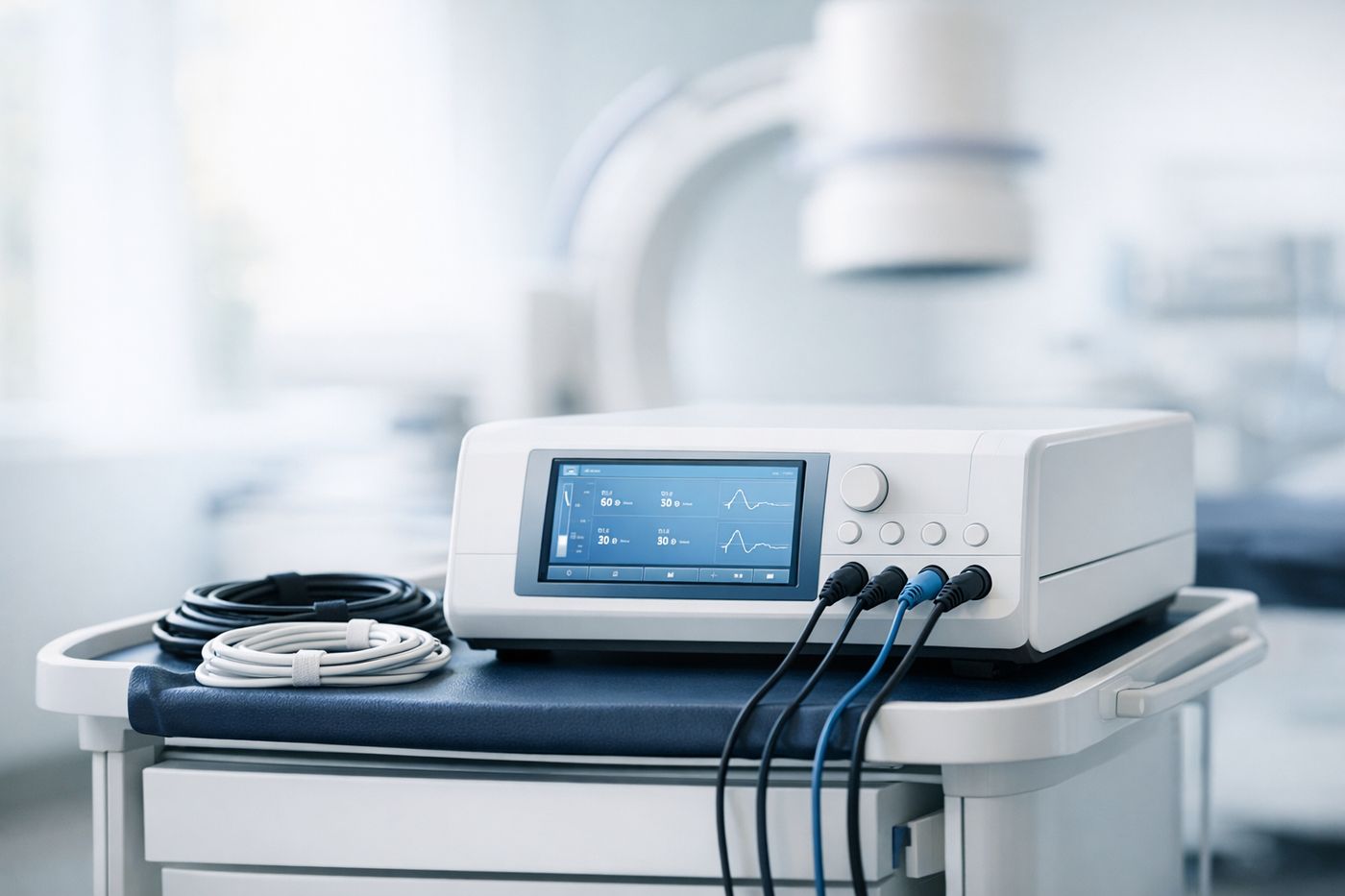
Radiofrequency ablation, often shortened to RFA, is a procedure that uses heat generated by radio waves to interrupt pain signals traveling along small nerves that serve the facet joints of the spine. It is distinct from a diagnostic medial branch block, which is a short-acting test used to identify whether those nerves are the source of a patient's pain. The block answers a question; the ablation is one of the options that may follow when the answer points clearly to the facet joints.
Because RFA targets the nerves rather than the joint itself, it does not address every kind of back pain. Providers typically reserve it for patients whose discomfort has persisted despite more conservative measures such as activity modification, physical therapy, and time. It is offered as a way to reduce pain signaling for a period, not as a permanent structural repair.
How candidacy for radiofrequency ablation is determined
The single most important step before RFA is a positive diagnostic block. During a medial branch block, a small amount of local anesthetic is placed near the nerves suspected of carrying the pain. If the patient experiences meaningful, if temporary, relief afterward, that result suggests those nerves are involved and that ablation may be worth discussing. Many practices ask for two confirmatory blocks before proceeding, because the diagnostic accuracy matters a great deal for whether RFA is likely to help.
Candidacy also depends on the broader clinical picture. The clinical team reviews imaging, prior treatments, overall health, and any conditions that affect bleeding or healing. Patients taking blood-thinning medication, for example, are usually asked to review their regimen with their prescribing physician well before the procedure date. Active infection, certain implanted devices, and pregnancy are among the factors that can change the plan. None of this is decided in isolation; it is a conversation between the patient and the provider about whether the expected benefit is reasonable given the individual situation.
It is worth emphasizing that a positive block does not promise a particular outcome from ablation. Responses vary from person to person. Providers describe RFA in terms of likelihood and typical patterns rather than certainties, and patients who respond well often report reduced pain for a number of months before the treated nerves gradually regenerate.
The procedure day and the recovery window
On the day of the procedure, patients are generally asked to arrive with a driver, since sedation is sometimes used and driving afterward is not advised. The procedure is usually performed on an outpatient basis. The patient lies face down while the skin over the treatment area is cleaned and numbed with a local anesthetic. Using live imaging guidance, the provider positions a thin insulated needle near the target nerve. Before any heat is applied, the position is tested to confirm the correct location and to protect nearby structures.
Once placement is confirmed, the tip of the needle heats a small area for a brief period, interrupting the nerve's ability to transmit pain signals. Several nerves may be treated in one session depending on the plan. Many patients describe a pressure sensation rather than sharp pain during the process. The active portion of the procedure is typically short, and patients are monitored briefly before being discharged the same day.
In the recovery window, it is common to feel soreness at the treatment sites for several days, and some patients notice a temporary increase in their usual discomfort before it settles. Applying ice, resting on the first day, and then returning gradually to normal activity is a typical pattern the clinical team may recommend. Strenuous exertion is usually postponed for a short period. Pain relief from ablation is not always immediate; it can take a couple of weeks to become apparent as the treated nerves quiet down, and the timeline differs between individuals.
Patients are asked to watch for signs that warrant a call to the office, such as increasing redness, warmth, drainage at a needle site, fever, or new weakness or numbness. These are uncommon, but reporting them promptly allows the team to respond. Follow-up visits give the provider a chance to assess how the patient has responded and to discuss next steps, which may include physical therapy to build on any improvement.
Because the small nerves can regrow over time, the effect of RFA is not permanent, and some patients choose to repeat the procedure if their pain returns and if their provider agrees it remains appropriate. Understanding this cycle helps set realistic expectations: RFA is best thought of as a durable but time-limited option within a larger plan for managing chronic back pain, rather than a single event that settles the issue for good.
Anyone weighing radiofrequency ablation is encouraged to bring their questions to a consultation, including questions about the diagnostic blocks that precede it, the expected duration of relief, and how the procedure fits alongside their other treatments. A candid discussion is the best way to decide whether the approach makes sense.
This article is informational and is not medical advice. Treatment options should always be made in consultation with a qualified physician.