
Shoulder Genicular Nerve Rhizotomy: How Candidacy Is Evaluated
For people living with persistent shoulder joint pain, a procedure that targets the small sensory nerves around the joint can be part of the conversation. Genicular nerve rhizotomy, sometimes described as radiofrequency ablation, is considered only after a structured evaluation. This article walks through what that evaluation looks like at our clinic, so a first visit feels less like an unknown.
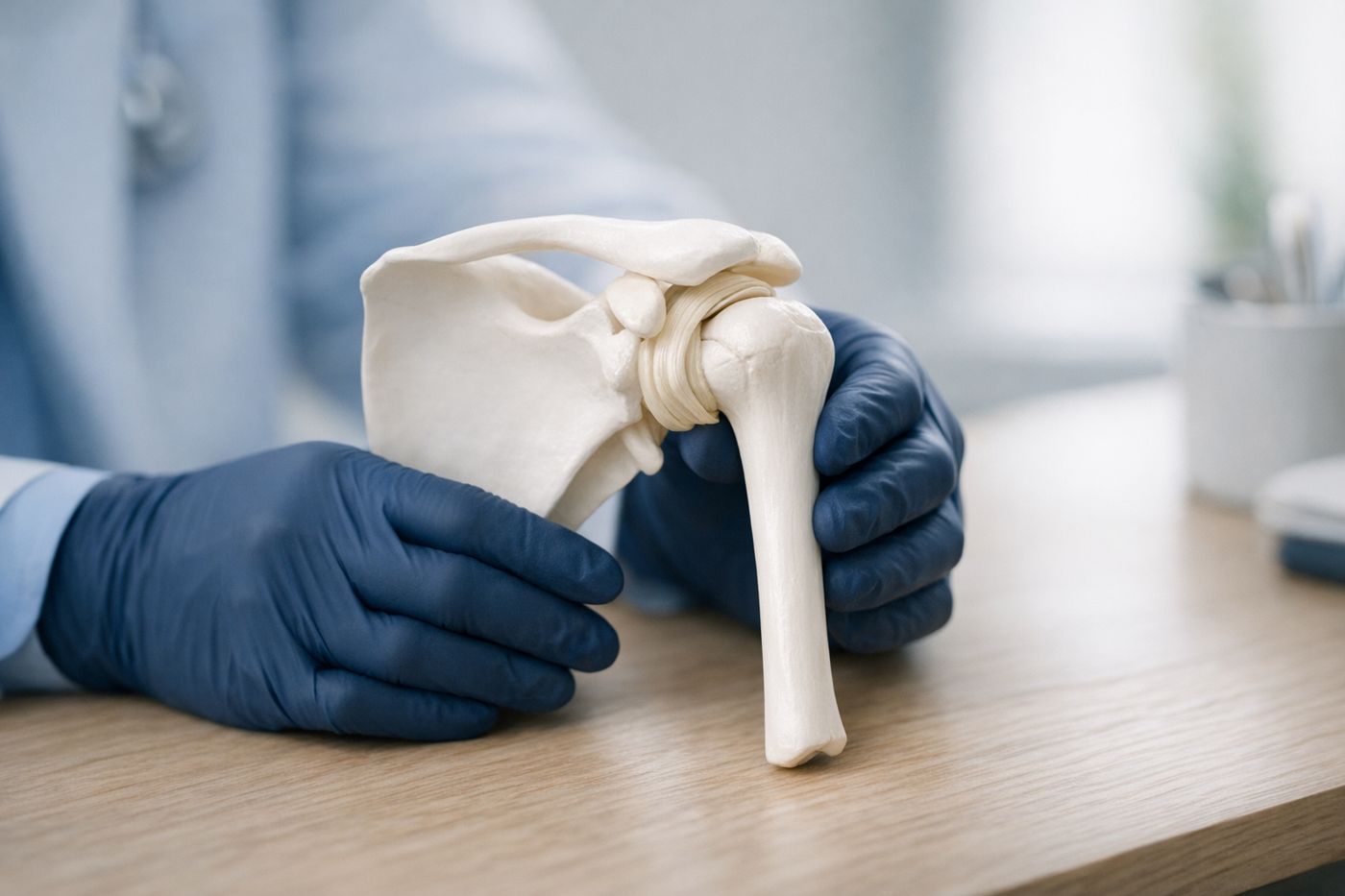
Shoulder pain that persists for months despite rest, physical therapy, and earlier interventions often comes from the sensory nerves that carry signals from the joint capsule. Genicular nerve rhizotomy aims to interrupt those signals by applying controlled heat to specific articular branches, commonly the suprascapular, axillary, and lateral pectoral nerve contributions. The procedure is not a first step. It sits at the end of a careful evaluation process designed to identify who is likely to benefit and who is better served by another approach.
The clinical team begins with a detailed history. Providers ask how long the pain has been present, what makes it better or worse, and which earlier treatments were tried. They review imaging such as X-rays or MRI, not to repeat work already done, but to understand the structural picture. A shoulder with advanced joint changes who is not a surgical candidate, or a person who has had surgery yet still reports significant pain, may be the kind of situation where nerve-targeted options are discussed.
A focused physical exam follows. The team checks range of motion, strength, and the specific movements that reproduce the pain. This helps separate pain that originates in the joint capsule from pain driven by the rotator cuff, the cervical spine, or surrounding soft tissue. Because the procedure targets sensory nerves rather than the structures responsible for movement, candidates whose pain maps to the joint itself tend to be considered more closely.
Why the diagnostic block is the deciding step in candidacy
The most important part of the evaluation is the diagnostic nerve block. Before any rhizotomy is scheduled, the team performs a temporary block by placing a small amount of local anesthetic near the target nerves, usually with ultrasound or fluoroscopic guidance for accuracy. The idea is straightforward: if numbing those specific nerves meaningfully reduces the pain for the duration the anesthetic is active, it suggests those nerves are carrying the pain signal. If the block produces little change, it points toward a different source, and the rhizotomy is unlikely to be the right choice.
Patients are usually asked to track their pain in the hours after the block, often on a simple scale, and to note ordinary activities that were easier or harder. Some clinics use two separate blocks on different days to confirm the response before moving forward. This step protects patients from undergoing a procedure that the evidence does not support for their particular pain pattern. It also gives the person a preview of what relief from those nerves feels like, which can inform the decision together with the provider.
The diagnostic block is generally brief, performed in an outpatient setting, and does not require general anesthesia. The team reviews any blood-thinning medication beforehand, since temporary adjustments are sometimes needed, and discusses allergies and prior reactions to local anesthetics. Patients who respond well to the block, and who understand that the result is informative rather than permanent, are the ones who typically move into a discussion about rhizotomy.
What the consultation covers and how to prepare
The consultation is a two-way conversation. Providers explain what the procedure can and cannot address, the expected recovery, and the realistic range of outcomes. They are clear that relief varies from person to person and that nerves can regenerate over time, which means the effect may be temporary and the procedure can sometimes be repeated. They also review alternatives, including continued physical therapy, joint-focused injections, or surgical referral when appropriate. The goal is an informed choice, not a sales pitch.
Preparation for the visit is simple, and a little organization makes it more productive. The clinical team suggests bringing the following:
- A current list of medications and supplements, including any blood thinners or anti-inflammatory agents
- Copies or access details for recent shoulder imaging and prior procedure records
- A short written history of the pain, including when it started and what has been tried
- Notes on daily activities most affected, such as sleep position, reaching, or dressing
- Questions about recovery time, return to work, and what relief might look like
Patients are also encouraged to be candid about goals. Someone hoping to sleep through the night has a different conversation than someone aiming to return to overhead athletic motion. Setting expectations early helps the provider tailor advice and decide whether the diagnostic block is a reasonable next step.
On the day of any procedure, the team typically advises arranging a ride home, wearing loose clothing that allows easy access to the shoulder, and following any fasting or medication instructions given in advance. After a rhizotomy, mild soreness at the site is common for a short period, and the team provides specific aftercare guidance, including when to resume therapy and which symptoms warrant a call back to the office.
Candidacy for shoulder genicular nerve rhizotomy is a process rather than a single yes-or-no answer. It rests on a clear pain history, an exam that localizes the source, and above all a diagnostic block that demonstrates the target nerves are involved. People who reach that point with a positive block response, realistic expectations, and a shoulder that is not better addressed by surgery are the ones most often considered. The evaluation exists to match the right treatment to the right person.
This article is informational and is not medical advice. Treatment options should always be made in consultation with a qualified physician.